

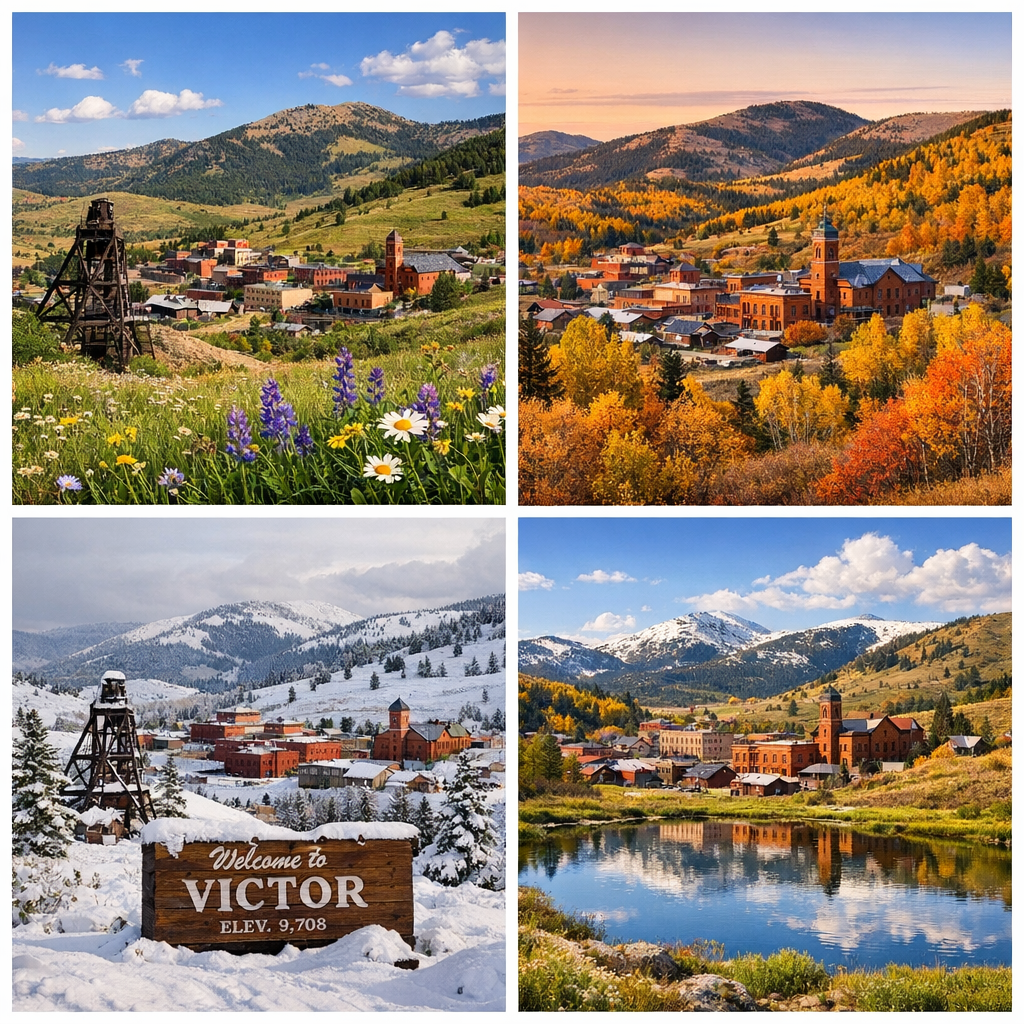
Victor, Colorado, nestled in the heart of the Rocky Mountains, experiences a diverse range of weather conditions throughout the year. Understanding these patterns can help residents and visitors alike prepare for the varying seasons.
Winter: December to February
Winters in Victor are cold and snowy. Average high temperatures hover around 34.5°F (1.4°C) in January, with lows dipping to 13.1°F (-10.5°C). Snowfall is common, contributing to the town’s picturesque winter landscape. Residents should be prepared for icy conditions and ensure their homes and vehicles are winter-ready.
Spring: March to May
Spring brings a gradual warming trend. By May, average highs reach 56.0°F (13.3°C), with lows around 32.8°F (0.4°C). This season also sees increased precipitation, averaging 1.67 inches (42.4 mm) in May. It’s a time of renewal, as snow melts and local flora begins to bloom.
Summer: June to August
Summers are mild and pleasant. July, the warmest month, boasts average highs of 72.2°F (22.3°C) and lows of 47.4°F (8.6°C). Despite the warmth, July also records the highest precipitation, averaging 4.52 inches (114.8 mm), often due to afternoon thunderstorms. It’s an ideal season for outdoor activities, but always be prepared for sudden weather changes.
Autumn: September to November
Autumn sees a cooling trend. By October, average highs are around 53.1°F (11.7°C), with lows of 30.1°F (-1.1°C). Precipitation decreases, and the landscape transforms with vibrant fall foliage. It’s a favorite season for many, offering crisp air and scenic beauty.
Understanding Victor’s climate is essential for planning daily activities and seasonal preparations. Always stay updated with local weather forecasts and be prepared for the dynamic conditions that each season brings.